Week 4 Reflection

This weeks class served as a bit of a refresher for me since I’d used a few of the tools such as OpenRefine in a previous unit. The tool Plot.ly reminded me a lot of the graphs I used to make in Microsoft Excel during High school, although admittedly Plot.ly is much more sophisticated and easier to use.

One of the things I have realised through this unit is that I am fairly adept at following instructional walk-throughs, but unfortunately that does not mean that I am able to translate those skills easily into other practical applications.

One of the other things I have realised this week is that I prefer the face-to-face sessions as it keeps me focused. I’ve been having a bit of trouble these past few weeks being self driven, hence the lack of the first two weeks of reflections. This one will be on time though, so that is all I can hope for.

I can’t wait for the next few weeks to expand my knowledge of data manipulation skills. I must admit that finding new tools to use is one of my favourite things about this unit. Hopefully next week shall be just as enlightening!
 

Week 4 I embedded some charts

Today was a great day. The following is the various graphs I messed with on Plot.ly.

This took some time because I goofed and didn’t select the male and female numbers as the y axis. Got there in the end.

So this tutorial really opened up my mind to what I could do for my project which is really cool because I was a little stuck with that.

I like how you can pull together a whole heap of information without too much effort. This could be really useful not just in the heritage field but also for a couple of my assignments I have coming up, so yay.

I am probably going to do the tutorials on how to use the command line to put data into folders onto my computer like Tim showed us in class. I can immediately see how that would be useful in an assignment, especially as I use trove a LOT for articles.

Katie

Week 3 – Seamfulness and generous interfaces in digital heritage

Hello,

The richly described and evocative concepts introduced and discussed in last weeks readings, further uncovered the possibilities of digital heritage mapping and visualisation.

I liked how Whitelaw saw seamfulness [as]…’an ethical and political stance’: a commitment to exposing interpretive distance. The discussions about transparency, in Sherratt, Sadler and Boug and Whitelaw, and the creation of alternate recourses and experimental platforms, than say, relying on google (yeah, now I can see how limited it is!) also influenced me. The parallels drawn by Sadler and Boug between feminist principles and creating an ethic for digital heritage culture were pointed and realistically grounded, especially how they challenge the notion of the ‘dispassionate’ researcher/archivist.

I’ve come across and greatly admired Ben Ennis Butler’s (and Mitchell Whitelaw) work on the Australian Print Collection ( link through NGA website) – it’s contemporary, local and relevant (for me )and it helped contextualise how collections can be accessed and presented in an inspiring and generous way.

The animated GIF’s were great and I’ll give it a go over the coming days,

Anna

Week 3 – Bits and Pieces

Hello.
I have to say, I like to tweet. I am naturally verbose, but I like the challenge of highlighting something or making a point in a limited number of words. Blogging feels strange, like talking to no-one or to myself…
Aiden, thanks for pointing out Mitchell Whitelaw’s Ted talk. I was lucky enough to attend a symposium at Canberra University a couple of years ago where Whitelaw spoke about “Generous Interfaces” vs empty search boxes. It transformed my thinking. Following the symposium, I was tasked with overseeing a project at the NMA that resulted in Collection Explorer (http://collectionsearch.nma.gov.au/) developed by a Canberra based web company Oxide Interactive (http://www.oxideinteractive.com.au).
I believe Collection Explorer includes many of Whitelaw’s concepts – inviting users in object type, place and even by material. Like Trove, Collection Explorer exemplifies a platform which continues to be a work in progress as NMA collections continue to be digitised. Also new ways to interact and traverse the collection are developed as time and money allows.
In terms of other great generous heritage interface my favourite continues to be the Rijksmuseum (https://www.rijksmuseum.nl/en/rijksstudio). Not only does this site entice you to explore, but much of the material offered is out of copyright and reuse is encouraged!
Regarding Google Algorithms and Filter Bubbles – it’s frightening to consider how our thoughts, actions and lives are being unconsciously directed and shaped without our consent. Masses of Information is added to the web on a daily basis, and with this ever increasing volume it’s difficult to see how in the future we’ll be able to navigate through the jungle/web to acquire a balanced diet of “vegetables and Desert”!

Week 3 – Thoughts on searching.

Hi,

After reading Mitchell Whitelaw’s paper, it felt vaguely familiar. Then I remembered that I had seen his Tedx talk from 2010, in which Whitelaw explains the power of visualisation for digital collections. Whitelaw does an amazing job of conveying all the amazing aspects of these visualisations, and also being excited about the possibilities.

I certainly agree with Whitelaw, although Search engines have their strengths, they’re not the best way to show off a collection to someone who isn’t familiar. Funnily enough, my favourite examples of these visualisations, that Whitelaw is talking about, are the tactile displays at the NAA and the National Arboretum. If you haven’t had the chance to seem them, they’re both worth checking out.

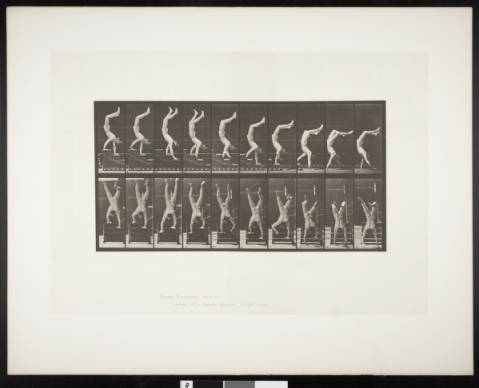
I would write more here but i need to go watch a GIMP tutorial so I can make a prize winning gif. My goal is to make this image of an acrobat from the USC Libraries loop, so he can walk on his hands forever.

Handstand0

Cya Wednesday

Aiden


A couple of thoughts for Week 3

1. When searching a particular phrase the results that are returned should reflect an actual answer to what you are asking for not just the current bias.
2. http://pmem.unix.fas.harvard.edu:8080/peabody/browse I particularly like the selection process on the Peabody Museum in Boston with the groups of commonly requested items. They give you a visual guide to the objects others have previously been engaged by.
3. Using a set of my favourite song lyrics from Florence and the Machine, the hippo ate words such as love, father, kisses, children, turning, happiness etc. This returned a result of census records and photos from Trove, the Natural History Museum in London. Naturalis Biodiversity Center on Europeana, La Foruna Visiva di Pompei on Europeana. Im not a hundred percent certain what the point of this particular exercise was meant to achieve.

Reflection (not forgotten, just)

So after forgetting to reflect last week, I almost forgot again. But here I am, surprised by the very nature of Google search. Somewhere in the back of my mind I think I knew but still I am some form of shocked. I don’t believe we should have a filter bubble. When I search something, I am searching for the most real piece of information possible that fits into the category of my search rather than the category of my personalised views and opinions. A search should be unbiased and untainted. You should be able to receive the tiniest detail of information based on its accuracy, not your web browsing history and social media history.

The last part about copyright I did have knowledge of. However I was unaware of how it affected our ability to interact with our cultural heritage and history. In a way I am surprised there is not a better filter system that allows certain less sensitive materials through and more sensitive materials are kept locked up. So it talked about how the library would have to go through and check every author and if they died before 1955 and this process could lead to less information being released. But what if a system was creative that could do it for the library? I would think that while we would lose some heritage to copyright, we would gain others from it. Besides that, eventually it would all be released anyway because eventually it would pass that 70 year mark.

As inaccurate as that thought may be, I just thought I’d share.

That said, I enjoyed this weeks tutorial. I mostly enjoyed messing with the Serendip-o-matic for a bit. Very distracting.

Katie

Week 3 Reflection!

Hey everyone,

I thought this weeks activities and readings were really interesting. When I googled unprofessional hairstyles for work my results were screenshots of the results (inception), so for a second I wasn’t sure what I was looking for. As James said in his reflection, it made me wonder what the results would have been like prior to the experiment going viral.

I have noticed/read about the filter bubble before but I still cant believe how advanced technology is in terms of using our history and location to limit our view of the world to only things we are interested in, it makes me feel like we are stuck in little bubbles despite having everything at our fingertips.

I think that http://www.artbinderviewer.com/ is a good example of a generous interface. There are two options to search the collection, one is via keyword – not so generous; the other is by COLOUR! It doesn’t require a search term, it doesn’t expect the viewer to know anything about the collection or what they’re looking for other than the colour, which is why I think it works well under the category of ‘generous interface’.

Thanks everyone,

Nour.

Week 3 Reflection_u3125186 Yizhuo Zhang

For the filter bubble showed in this week’s tute, to summarize, it’s just what you tell the tool and the tool back to you. I have talk about it in week 2’s reflection, a Microsoft tweeter bot.

I have learned the unit ‘Communication Evolution’ in last semester, it also tells us how filter bubble works. It will back to you the search results depend on what you searched before. It depends on people’s living habit, religion, work place and more.

One of the article in this week’s handbook says this feature could limit people’s horizon.

That’s true, but not always true.

Filter bubble can optimize people’s experience. People won’t expect to get the result about ‘University of Canberra’ if they live in California, and don’t want to see the good news about Donald Trump if they support Democratic Party.

I’ve heard a news about Facebook, it says the Facebook is more likely to show good news about Democratic Party rather than Republican. This status could be the result of people’s searching, Barack Obama is very popular on Facebook since he starts election. Or some people says that’s the result of Facebook and financial group’s control.


I’ve read the article’s about bias in collection research in the handbook. Perhaps it just like what we get from search engine. I’m interested to do my project about this, but I don’t know how to start.


Serendipity is very cool. It just shows me the results of some key words input, and you can expect magic happened. Some results are very interesting. The difference between Serendip-o-matic and Google is, Serendip-o-matic give you the results just from the collections, but Google gives you the results from the whole Internet. You can see the ‘past’ in Serendip-o-matic, and see the ‘now’ through Google.


For the Copyright issue in week 3 workshop, I think it’s indeed a problem. What we can do is just work hard in current condition, and try our best to get good results. It also apply to other problems we may face in heritage research.

Week 3 Reflection

Week 3:

The nature of filter bubbles was very interesting, I noticed a lot of results were referring to the experiment in the form of screenshots of the comparisons. I wonder what the results were like in the past and if it has shifted not just from what caused controversy recently but how the results would have shown up several years ago. It could be interesting to use google search results of the same phrase from different times as a sort of historical snapshot to then interpret.

Serendipity is pretty intriguing  I searched the only quote I can remember from Gladiator and it came up with several images of various nondescript scenes marked as Title not known, date unmarked there is no way I would logically come across these if I was searching for a certain title the words “are, you, not, entertained” are hardly words I would search in a database. Yet here are photos I would never have seen, it’s obviously hard to use this when researching something but using it to find something to research or just maybe lucking out and finding something relevant is very cool!

James,

css.php