Week 11 – Reflection

This week we looked at archiving the web. I explored some flash backs to the past like Pacman and Windows 3.1. I was definitely taken back to my childhood with my mother playing solitaire in the kitchen. Archiving the web is fantastic for time travel. We can create whole worlds within our computers and never feel like we left a decade.

I also tried the Wayback machine. Now I am not sure if I am using it wrong but I did find that some younger websites that I tested did not give much detail at all. Even though some sites were created in 2013-2014 the earliest date I could get was around mid 2015 and even these snapshots didn’t display images and fonts. I wonder if the website builder used for individual websites has something to do with how these sites are archived in the wayback machine. I tested some older sites and while they could take me back to 2004, the captures were pretty much blank until I reached 2015.

Web archiving is certainly something that needs wide attention for historical records. Although it does create an individual and perhaps moral conundrum for people who want something removed from their website for reasons such as character deformation, wrong information being displayed, mismatched facts etc. The old saying that ‘once something is on the web, it is there forever’, really comes to mind.

The twitter archive not only has archival benefits for historical records but also trend migration. I see the use of TAGS being archived very helpful when exploring the way news travels and what topics are popular at different times. Combine this with real world news events and we have the start of a map for how news and events influences behaviour.

Week 10 – Reflection

The main difference I feel with AR, VR and 3D experiences today when compared to virtual experiences ten and twenty years ago, is that the public are more accepting of it and our acceptance is only going to grow. Nothing is truly different, just modified, expanded and more appealing to the modern eye. So integrating virtual experiences into museums will definitely aid in the learning and entertainment practice of institutions overall. How this is ultimately done will depend on how the public receives it and inturn will be adjusted accordingly.

This week I experimented with the 123Dcatch App. I created an image of a vitage kitchen scale. Check it out below in the link – http://www.123dapp.com/Catch/Vintage-Persinware-Kitchen-Scale/6285472

I did go on to experiment with meshmixer and sketchfab however it is all very fiddly and like many weeks before I feel I need to just move on in order to cover the workload, after all it took 4 tries to capture an image in 3D that was presentable.

One of the best ways to engage and learn is by using our senses, smell, taste, touch, sight and hearing. The use of 3D images and printers to recreate objects would definitely aid in the learning value to students. Replicas are a great way of understanding the past and the future. Engineers and architects use 3D models to predict the viability of buildings before spending time and money on implementing them. We use 3D models in chemistry to reconstruct models of atoms that cannot be seen by the naked eye. The benefits of 3D structures are already in place. Unlike the real thing however the smell, weight, textures etc of the object may not match up and this could potentially harm a learning experience. An image comes to mind from my Geochemistry class last semester. Two people side by side held up a bar of gold. To the unknowing person it looked like they both were rich. However someone with a little more ‘real’ experience could notice the difference between the two. One person held it  low by their waist while the other person held it high above their head. This wasn’t a battle of strength, this was an image of what it takes to hold the real thing which is extremely heavy compared to a lightweight fake.

No matter how much we can offer a virtual experience we are still going to want to experience the real thing. We are improving on the realness of the experience but that will never replace first hand experiences. The main difference I note with a virtual made up experience and the real thing is the dirt. The dirt is cleaned up for public viewing. The virtual tour of Rome showed buildings in mint condition, they weren’t falling down, half built, cracked, pooped on, burnt, dirty. They were clean and presentable.

Medieval or pilgrim re-enactments for example deliberately cut out some of the harsher conditions of the time. As best as people strive to re-create the exact conditions, some of the things left out are the actual blood, dead bodies, the stinky toilet pits and days without a shower. The re-enactments are all very sanitary and it appears that virtual history is heading the same way. Reflecting back on my 3D image, it actually appears in worse condition in the 3D image then it is in real life. However, had I pursued cleaning it up and better quality photography it too could look better then it is. It is something we the people are just going to have to muddle through, we will debate, protest and go back to the drawing board time and time again when it comes to how we wish history to be portrayed in the present day.

 

Reflections for Week 12


This week I continued to work on the website, it is starting to look quite good

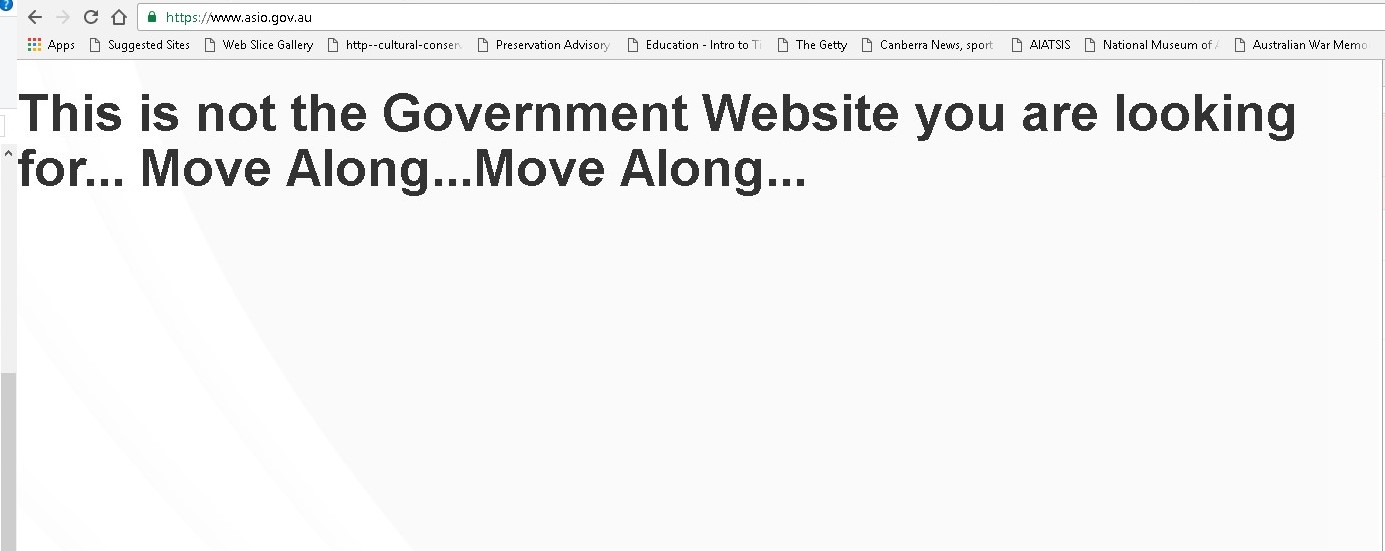
From a Lesson perspective we were back onto the website console again and this week we just copied and pasted some content to change the view of the site to say ‘All your secrets are belong to us’ on the ASIO website.

hacking-asio-class-trial

Not happy intil I tried it myself I altered the script and tried it in both ASIO and ASD websites (and then there was a loud knock on the door…fortunately it was just pizza!).

hacking-asio-my-trial


hacking-asd-my-trial

Thank you, Tim, for a great semester!  It was certainly a challenge to get my old Analogue head around some things but I enjoyed the Digital world challenges and overall it was an enjoyable experience.

Reflections for Week 11

This week I have the final images and stories ready for uploading to the website, once done I’ll then start the process of testing all the links and making sure it all works, it has run live now for about a week.

Our class notes this week have us looking at archiving tools available to use to archive collections, digital records, files or just about anything found useful on the web. From a Commonwealth perspective, there are a few systems available for digitising available from the Australian Government web archive http://webarchive.nla.gov.au/gov/ and Pandora http://pandora.nla.gov.au/ to some smaller projects like the National Archives of Australia digitisation project for digitising it’s paper archive http://www.naa.gov.au/records-management/agency/create-capture-describe/physical-records/index.aspx .

Whilst a fully functional digital archive is a great tool, they are expensive to operate and maintain with any use they provide being that of providing the intangible support to the tangible objects that nay still exist in the collection.

Digital archiving is here to stay, its success will depend on its flexibility and capability to support the cultural displays or records management programs in the future.

Reflections for Week 10

Reflections for Week 10

My project is coming along having received an actual domain name (url), images and works being positioned suitable for both PC and Mobile device viewing and even with my very limited experience, it is starting to look good.

This week we looked at digital heritage through the realm of virtual reality, augmented reality, 3d imaging and 3d printing and was another great lesson in the use of technology  for the betterment of cultural heritage (though my attempts to recreate a 3D version of an old school bell resulted in something more akin to works by Salvadore Dali).

In areas like Iraq and Syria, this  technology is currently being used to document as many culturally significant objects, artefacts, landmarks and museums before the are lost forever due to war and acts of wilful destruction by extremist groups. These projects are described in greater detail on the internet through sites such as UNESCO, and there is a great article http://theconversation.com/preservationists-race-to-capture-cultural-monuments-with-3d-images-53536 ,  on the race to capture and preserve as much of this significant cultural heritage before it is destroyed by the IS extremist group.

Regarding future accessibility, it is a great digital program to record these sites in the greatest detail possible before they are lost forever. From a “Joe Public” view these collections will then have the capability to be made into exhibits for those who may not have the physical ability,  time, finances or simply just live too far away to now experience museums that they may have an interest in personally or professionally.

Reflections for Week 9

After some initial panic and a few hours of further study on website development courtesy of Lynda.com, my website is starting to come together, chalking this one as another successful week.

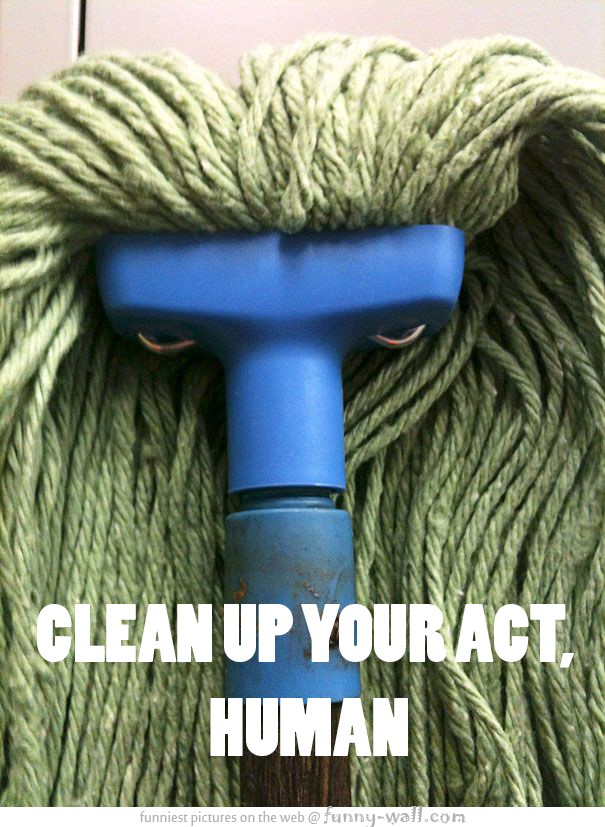
This week the lectures had us looking at new technology that would benefit the field of cultural heritage (and our lecturers continual attempts at poking the bear- ASIO…seriously he won’t be at class one day because a couple black vans have double-bagged him and carted him over to the Ben Chifley Building for a …. discussion about the true purpose of redaction).

We looked at facial recognition technology with several different facial recognition systems considered, all being able to match a face with a database of faces to find its owner including facial detection where a computer scans an image and finds the basic features of a face within.

objects-that-looks-like-faces-the-mop-face

If technology is going to keep growing in use and advances as it has (and will) then people just need to understand that early attempts of large-scale facial recognition (such as projects undertaken by Google and Facebook to link every face on its system with a name) will not always produce correct results and may even get it very wrong. Looking to more dedicated professional, commercial grade facial recognition systems, often incorporate retinal detection, thermal imagery and other features of the person to confirm a match.

The future is here; it is used in airports and casinos daily to target “persons of interest” and with advances in camera and digitising technology the accuracy is improving at a rapid rate.

Reflections for Week 7

Reflections for WEEK 7

This is it my project plan is complete and submitted (even though I left out a whole section I prepared on analytics and the use of Google Analytics as a tool to track website attendance).

This week’s class information I enjoyed looking at the many different uses for maps and the variety in the quality of cartography used to produce maps we use every day. One of the highlights of this week’s lesson data included the geo-rectifying of a map of 1865 Melbourne.

I also thought the process of geo-rectifying historical maps was very clever, we were introduced to this type of cartography during the Cultural Heritage Field School as a tool to verify spots of cultural heritage interest.

Reflections for Week 6

This was another busy week, approval to use images vital for the completion of my project were received this week and while it does not affect my ability to complete the initial plan it does have an effect on the final project.

This week we looked at data visualisation and some of the tools available that can be used in a digital heritage context. Using Plot.ly for creating graphs I created a stacked and group bar chart showing attendance at cultural institutions by gender (2013-14).

attendance-at-cultural-institutions-by-gender-2013-2014

It tells a story about categorical data such as institution type, traffic volume and visitor gender but to be useful the graphs also need to show why and how they achieved the attendance numbers (general visitors, special event, new movie release, etc.).

In support of creating graphs that tell a story, two of the site I found that did this quite well were the Timeline of Earth’s Average Temperature and Mapping Police Violence.  Both are aided further by graphs, charts, and other visualisations of data and both left you with a feeling that a story was told, though the further research into the why and how were still needed.

In conclusion, every graphic should be able to explain the data simply and in a way that a common answer or theory is visualised regardless of who reads it.

Reflections for Week 5

This was an interesting week, the subject of differing types of analyses appealed to my normal drive for solving complex problems (both at work and in class!). My project has life and apart from any setback with receiving the necessary approvals to use some information (even though it is freely available on the internet), all is currently looking good.

Research in/and on the subject of Commonwealth Policing has its limitations (i.e. Commonwealth Police were transferred to the new Australian Federal Police in 1979) any searches for historical information on this topic from 1979 will require the addition of both Commonwealth and Australian Federal police to yield the best results.

ngram-afp

Using Google Ngram it confirmed my search for books relating to either Commonwealth Police or Australian Federal Police had to be further defined or risk my final project looking cluttered and difficult to navigate.

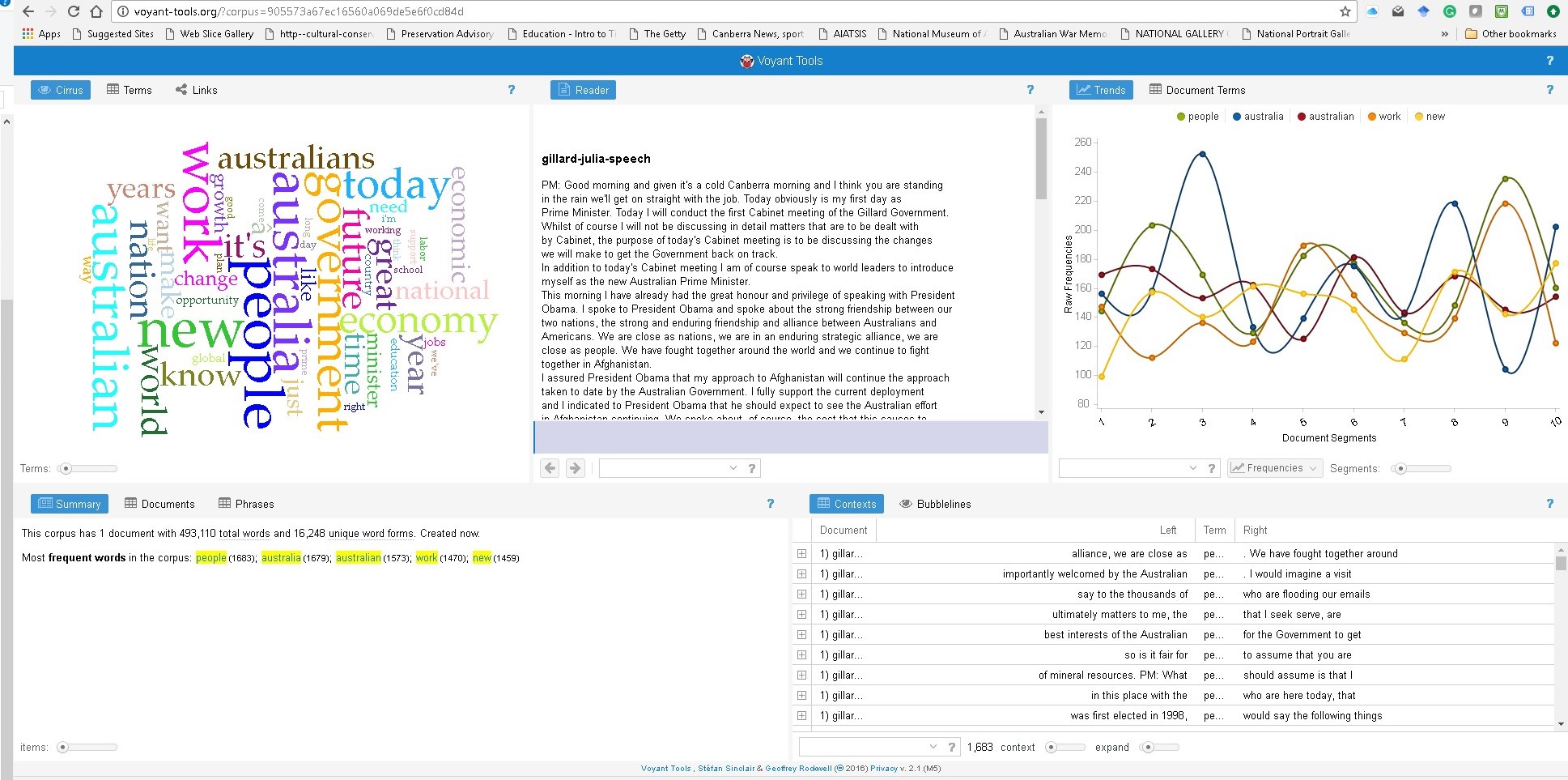
Back to the day’s lessons Voyant and Wordcounter offered some fun and is a great tool to run your own speeches or class presentations, using the outcomes as a guide for better speechwriting (no one likes to hear the word UMMM!)

voyant-julia-gillards-speach

Voyant Tools – Julia Gillard Speech

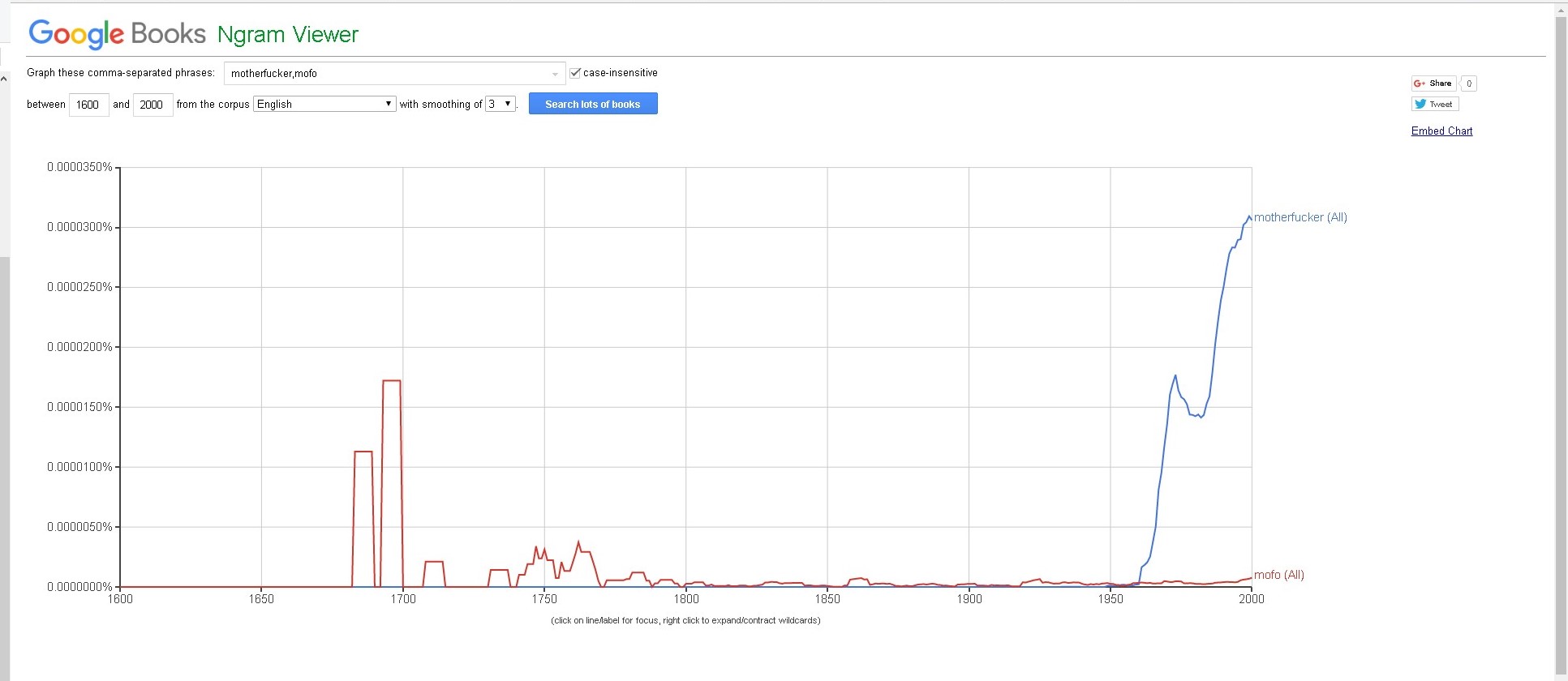
For the “dirty” work search words I chose Samuel L Jacksons favourite “motherfucker” its resurgence since the 1980’s I’d like to think is contributed to Mr Jackson’s colourful use of language.

ngram-mofo

Thankyou Tim, this was another great lesson.

css.php