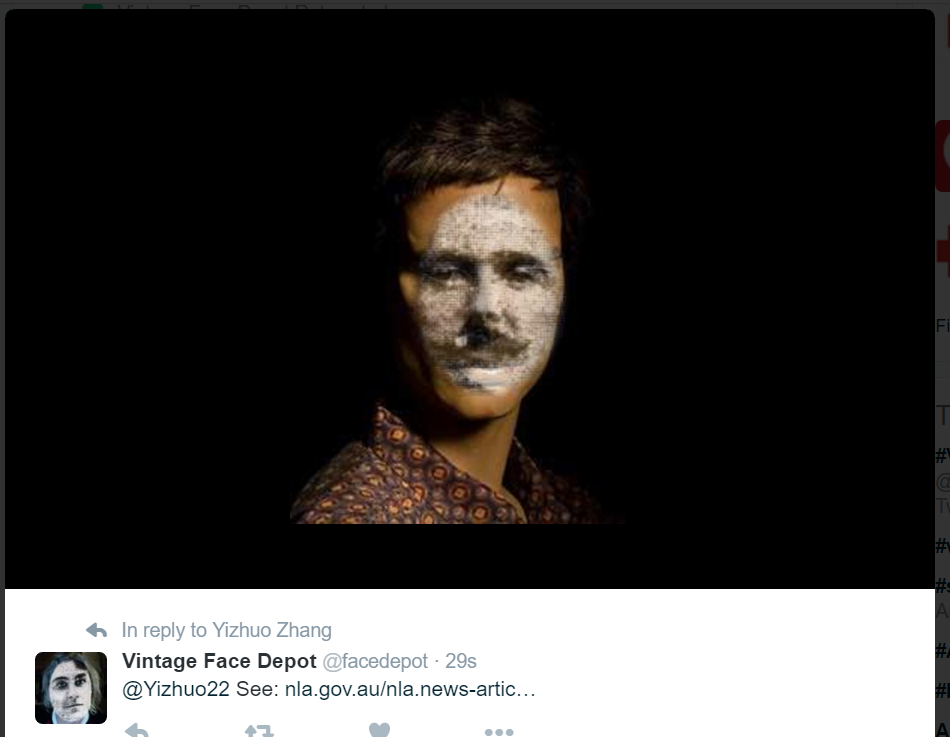
A trend has begun within these classes moving towards this class today I think. Ways in which we can utilise cultural heritage data to make it more engaging, and accessible using digital tools – and today really empathised that with the use of computer vision technology. We have looked at neatening data, making it into a variety of visual graphs and so forth. This week was all about images, and how to help computers see images in ways that are more useful and tangible for us (and sometimes accidental like Redaction ‘Art’). The most visceral and moving example was the images of the faces of people under the White Australian Policy. I think this is a beautiful way of fleshing out an issue that is widely known, but more in a way of dates and laws, rather than the actual who. Visual aids appeal to our humanity because a face is so recognisable and emotive, it instantly builds empathy because this is another person just like you or me.
Tim was discussing that the goal for another example, the Trovebot, putting faces on people who sent in photos was to try and connect people to the past in new ways. I love this as it continues to makes this data significant, because without interaction its meaning is lost. Face detection technology is a lot of fun too and I can see how this can be used in a variety of different ways, perhaps even at cultural institution with a photo booth like set up putting images of faces from the museum on to your own.
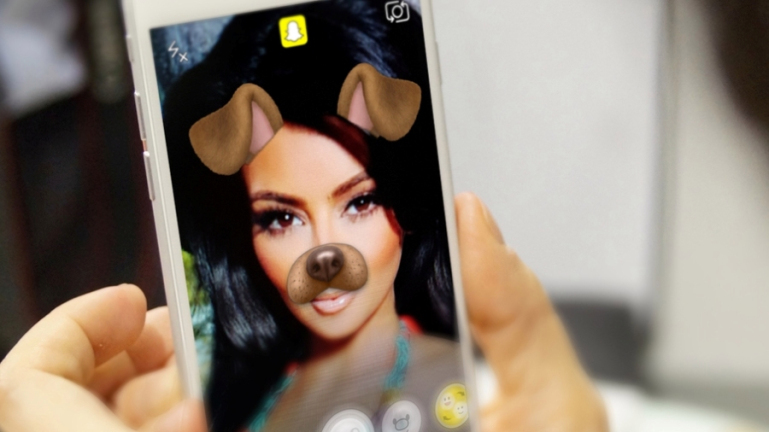
The face detection subject just reminded me a lot of the Snapchat filters that are popular, and sometimes they do have historically relevant ones (such as Marilyn Monroe on her birthday or the faceswap option where you can upload and image to swap with your own which I have seen is quite popular to do at classical art galleries). This is engaging, shareable and fun and this is another outlet that is potentially significant for cultural heritage as it is very good and well known technology.
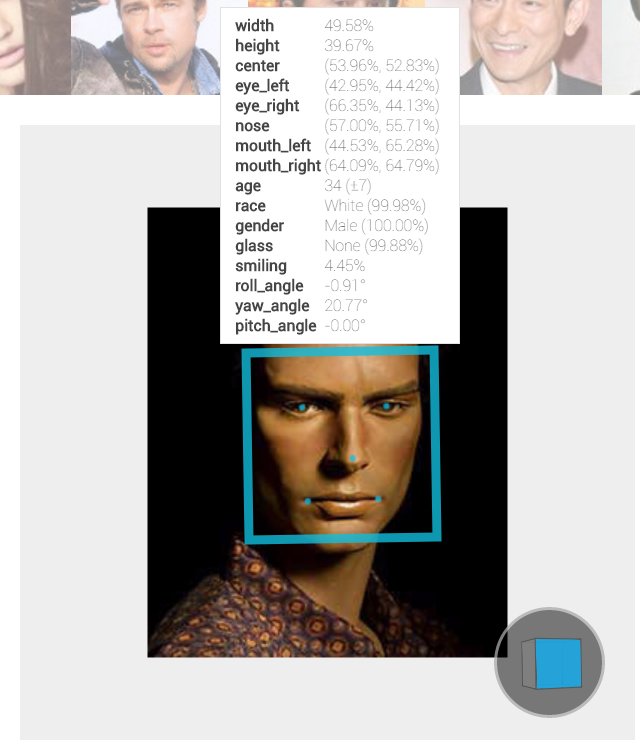
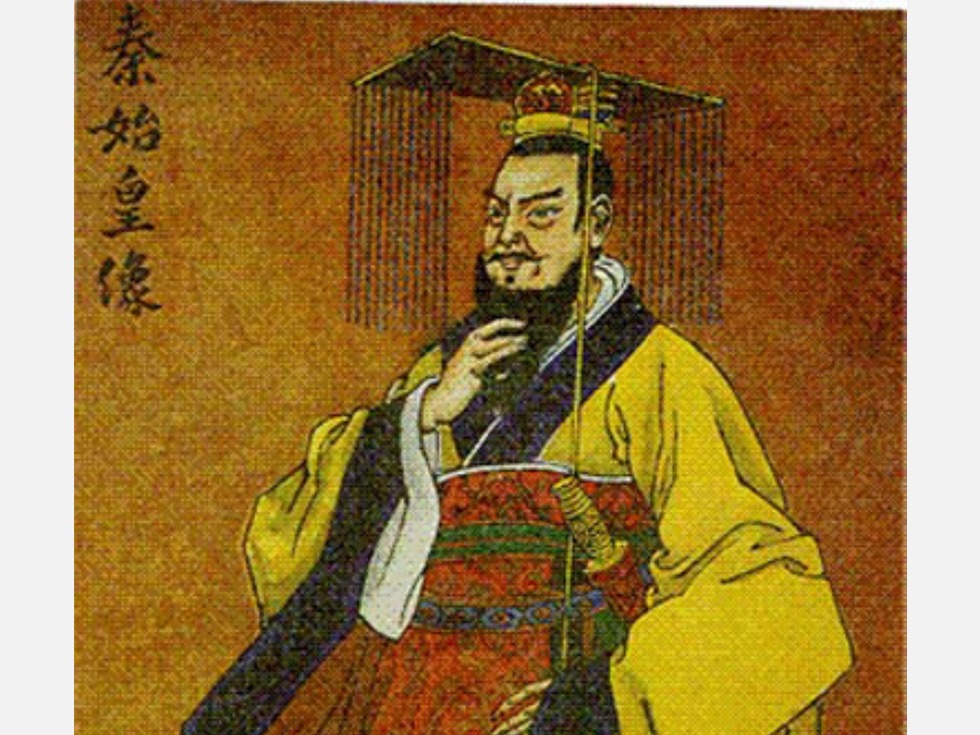
Facial recognition on the other hand, a little creepy, but without obvious benefits used by the right people. Being able to identify historical figures in object would be great for example.